
What is girth in shipping?
Girth is the distance around a package — like measuring a belt around a box or tube. Carriers use it, combined with length, to apply size limits and calculate billable weight. Here's how to measure it for different package shapes.
Measuring girth
- Cylindrical shapes: Use a measuring tape to find the circumference at the widest point. This is the girth.
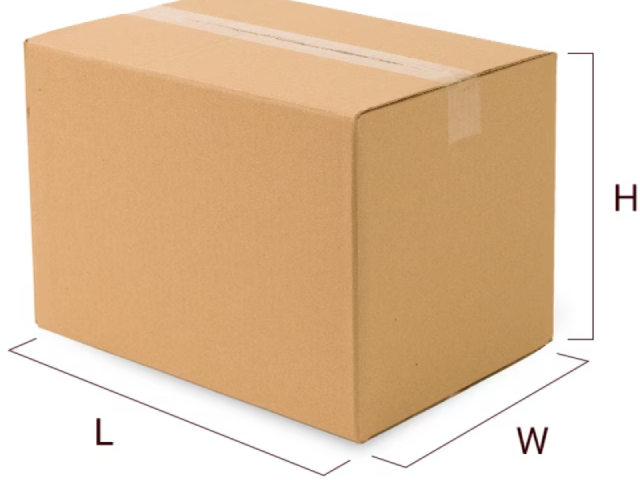
- Rectangular boxes: Measure the width and height. Girth = 2 × (width + height).
Example: a box measuring 5 × 8 × 12 inches, with 12 inches as the length, has a girth of 2 × (5 + 8) = 26 inches.

Determining girth on a box
- Place the box on a flat surface and measure the width and height, rounding to the nearest inch.
- Multiply each by 2, then add the results together — that's your girth.
Example: a box with an 11-inch width and 18-inch height has a girth of (11 × 2) + (18 × 2) = 58 inches.
Calculating length plus girth
- Measure the longest side of the package — that's the length.
- Measure the girth around the other two sides (excluding length).
- Add length and girth together for the combined figure some carriers use for size limits.
Accurately measuring girth helps you avoid unexpected size surcharges and choose the most cost-effective shipping option. See UPS weight and size limits for how girth fits into one carrier's specific limits.
Frequently asked questions
Does girth include the length of the package?
No — girth is the distance around the package (like a belt), not including length. Length plus girth is a separate combined measurement some carriers use for pricing and limits.
Why does girth affect my shipping cost?
Carriers price packages by billable weight, which compares actual weight to dimensional weight based on size. A package with a large girth relative to its weight can be priced by its size rather than its scale weight.